
Rhythm Tiles: Pop Songs
Agile Lion GamesCasual
4.695.00 Reviews
- Version
- 0.3.8
- Installs
- 10.00M
- Age Rating
- Everyone
Screenshots
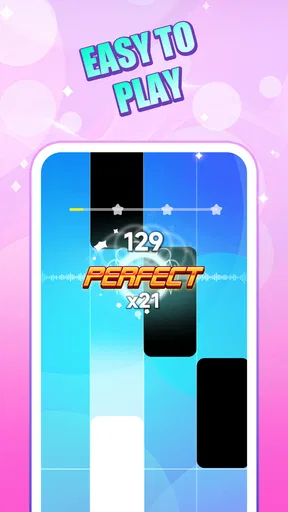
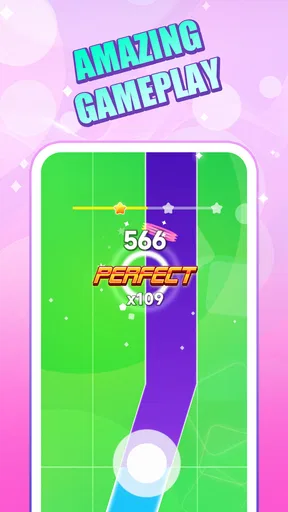
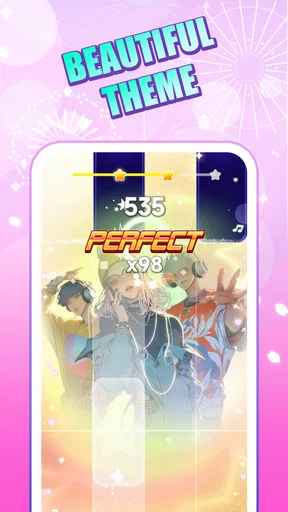



Our Review of Rhythm Tiles: Pop Songs
 Analysis by Appyee
Rhythm Tiles: Pop Songs is a casual music game from Agile Lion Games that turns familiar tapping into a short test of timing. I spent time with it as the kind of game you open for a few minutes rather than a long, story-driven session, and its strongest idea is easy to understand: follow the beat, tap the moving tiles, and try to stay in step with the song. That simple focus gives it a low barrier to entry, while the rhythm itself provides enough pressure to make even a brief round feel active.
The game is free and aimed at Everyone, so it is approachable for younger players, casual users, and anyone who wants something uncomplicated. Its average rating is 4.5 from around 11 thousand ratings, and it has passed 5 million installs, which suggests that the basic pick-up-and-play format has found a substantial audience. Still, popularity does not automatically make a rhythm game a good fit for every player. In my experience, the important question is whether you enjoy repeating short musical challenges and improving your timing, rather than whether you are looking for a deep music library or a full competitive system.
Why the tap-to-the-beat idea works
The central capability here is beat-based tile tapping. Instead of asking me to learn complicated controls, the game places the action directly under my finger. I watch the tiles, listen to the track, and tap at the right moment. That direct connection between sound and movement is what makes the game appealing: when my timing is good, the input feels natural; when I rush, the mistake is immediately obvious.
This design also makes the game easy to explain to someone else. I could hand the phone to a friend and describe the objective in one sentence. There is no long tutorial concept to absorb before the music begins. For a casual title, that clarity matters because the best use case is often an unplanned one: waiting for an appointment, taking a short break, or looking for something to do without committing to a lengthy session.
The rhythm focus changes the experience more than a standard tile-matching game would. With an ordinary puzzle, I can usually pause to examine the board and think through the next move. Here, hesitation is part of the challenge. The song keeps moving, and my attention has to shift between the visual pattern and the audio cue. That makes the game feel more energetic, even when the underlying action remains simple.
I also found that the music gives each attempt a different mood. A familiar pop-oriented track can make a basic sequence feel more engaging than a silent tapping exercise. The song is not merely decoration; it acts as a guide for timing. When I stopped looking only at the tiles and started anticipating the beat, my play became more consistent. That is one of the less obvious strengths of the format: the game rewards listening, not just fast fingers.
What a round feels like in practice
In a typical session, I begin by choosing a music game and then concentrate on the incoming tile pattern. The first moments are usually about finding the tempo. I may tap too early if I focus only on the tile’s position, or too late if I wait for the visual cue to become completely obvious. After a few attempts, the better approach is to combine both signals: use the screen to see what is coming and the music to judge when the tap should happen.
This is where the game can become more demanding than it first appears. A slow, careful player may perform better than someone who simply taps quickly. Speed without rhythm creates mistakes, while listening helps me prepare for the next input instead of reacting to each tile at the last instant. That makes the game useful as a small concentration exercise, although I would not describe it as a formal training tool.
The most practical tip I can offer is to lower distractions before starting a serious attempt. If I play while switching between conversations, notifications, or other tasks, the beat becomes background noise and my performance suffers. A short, focused session is more satisfying than a distracted one because the game depends on maintaining a steady mental connection with the track.
Another useful habit is to treat early failures as information rather than a reason to quit. When I miss several taps in the same section, the problem is often not that the sequence is impossible. I may be reading the visual movement too late, tapping from the wrist in an awkward position, or following the melody instead of the actual pulse. Replaying with a lighter touch and a more relaxed grip can make the pattern easier to follow.
Offline play and the everyday advantage
One of the most useful parts of the package is its offline rhythm-game positioning. For me, that makes the title more practical in places where a connection is unreliable or where I simply do not want to spend time loading a larger online game. A train journey, a waiting room, or a quiet break at work can become a suitable moment for a few rounds, provided the relevant content is available on the device.
Offline access also changes how I think about session length. I do not need to plan around a multiplayer match or worry about interrupting a live event. I can start a round, play for a little while, and put the phone away. That flexibility is a real advantage over rhythm games that depend heavily on ongoing online systems. It makes the game feel more like a pocket activity than a service demanding regular attention.
There is a tradeoff, though. Offline play is most valuable when the song selection already matches my taste. If I want a very specific artist, an extensive catalog, or constantly changing music, a larger streaming-focused rhythm game may be a better choice. Rhythm Tiles: Pop Songs is more appealing when I value convenience and quick access over the breadth of a music platform.
A realistic use case: the short break that does not become a commitment
Imagine that I have ten minutes before leaving home. I do not want to begin a role-playing game, watch a full video, or enter a competitive match that might be interrupted. This is where the game fits well. I can open it, choose a track, focus on the beat, and finish a compact challenge without needing to remember a complicated objective afterward.
The same applies during travel. If I am sitting somewhere with a poor signal, a rhythm game that can work offline is more dependable than an app built around constant synchronization. I can use headphones if the environment allows, or rely more heavily on the visual cues when sound is not practical. The latter is less enjoyable because the music is central to the experience, but the visual-timing relationship still gives the game a purpose.
For younger players, the straightforward controls are another benefit. The Everyone rating reflects the accessible nature of the game, and a child who understands tapping can grasp the basic interaction quickly. However, I would still judge the experience by the individual player’s patience. Repeated attempts are part of rhythm games, so someone who expects to succeed immediately may become frustrated even though the controls are simple.
Where the experience falls short
The same simplicity that makes the game welcoming can also limit its long-term appeal. If I want a detailed progression system, a strong narrative, complex customization, or a serious competitive ladder, this is not the game I would choose first. Its pleasure comes from the immediate rhythm challenge, not from building a large personal account or managing a deep collection of systems.
Music preference is another important limitation. A rhythm game lives or dies by how much I enjoy hearing its tracks repeatedly. Even a well-designed tapping sequence can lose its appeal if the available songs do not suit me. The pop and K-pop angle will attract players who already like that musical atmosphere, but it may feel narrow to someone who prefers rock, classical pieces, electronic sets, or user-selected music.
There is also a difference between visual accuracy and musical accuracy. A player with hearing difficulties, a noisy environment, or no access to comfortable audio may find the game less intuitive. The tiles remain visible, but the beat is harder to internalize without sound. In that situation, a purely visual puzzle may be more comfortable, while a rhythm title with extensive accessibility controls would offer a stronger alternative if those controls are important to the player.
Touchscreen rhythm games can create their own physical friction. A phone with a small display may leave less room for comfortable tapping, especially when I hold it in one hand. Finger placement, screen glare, and accidental touches can affect a run even when I understand the song. I get better results by holding the device steadily and keeping my tapping hand relaxed rather than gripping the phone tightly.
Another tradeoff is repetition. Replaying a track can be satisfying when I am trying to improve, but it can also expose the limited depth of a casual format. Players who enjoy chasing a cleaner run will see the repetition as a challenge. Players who need constant novelty may prefer a game that introduces new mechanics, events, or broader content more aggressively.
How it compares with familiar alternatives
Compared with a standard casual puzzle game, this title demands more continuous attention. A match-three game often lets me pause between moves, while the rhythm format asks me to stay engaged with the flow of the track. That makes Rhythm Tiles: Pop Songs a better choice when I want a more active break and a weaker choice when I am tired and only want something slow and forgiving.
Compared with a full music game built around a huge catalog, it feels more focused and easier to approach. I do not need to understand a large ecosystem before tapping along. The benefit is immediacy; the cost is that dedicated rhythm fans may eventually want greater variety, more advanced difficulty design, or a stronger sense of progression than a casual game provides.
It also differs from music-listening apps in an important way. Listening is passive, but this game asks me to respond. I cannot simply let the song run while doing something else if I want to perform well. That makes it a good companion for active concentration, but a poor substitute for relaxing with a playlist. If my main goal is discovering music, I would choose a music service. If I want to interact with a song for a few minutes, this game makes more sense.
Small techniques that improve the experience
I found three practical adjustments especially useful. First, I listen for the recurring pulse instead of chasing every tile visually. This helps me anticipate the next tap and reduces frantic reactions. Second, I use short sessions when my concentration is fresh. Because the game is casual, there is no need to force a long play period when my timing starts to decline. Third, I replay a difficult section with the aim of understanding its rhythm rather than merely tapping faster.
A fourth tip is to separate learning from scoring. On the first attempt, I focus on the song’s structure and the way the tiles arrive. On the next attempt, I try to make the taps smoother. This two-step approach is less frustrating than demanding a perfect run immediately, and it turns mistakes into a clear practice loop.
I also recommend testing the game in the environment where I expect to use it most. If I plan to play during travel, I check the offline experience before leaving. If I expect to play quietly, I see whether the visual cues are comfortable without relying fully on audio. These are small checks, but they answer the practical question that a store summary cannot: will the game fit my actual routine?
Who gets the most from this casual rhythm game
The best audience is someone who likes pop or K-pop energy, enjoys improving through repetition, and wants a free game that can be opened without much preparation. It is especially suitable for short breaks, offline moments, and players who prefer a clear objective over a complicated interface. The current version is 0.2.3, and the game’s straightforward identity makes it easy to understand even for someone new to mobile rhythm titles.
It is also a good recommendation for friends who say they want a game but do not want a major time commitment. I can explain the controls quickly, and the musical feedback makes the first session more engaging than a completely abstract tapping game. The free price removes the need for a purchase decision before trying the basic experience, which is helpful when I am recommending it casually.
I would steer dedicated rhythm-game enthusiasts toward a more specialized alternative if they need extensive song variety, advanced scoring detail, or a deep progression structure. I would also suggest a conventional puzzle game to anyone who prefers slow decision-making, and a music app to anyone who mainly wants to listen. This title succeeds when interaction with the beat is the point.
My recommendation after spending time with it
Rhythm Tiles: Pop Songs is a focused casual game rather than an all-purpose music platform. Its strongest quality is the way it turns a familiar song-game idea into an immediate physical response: hear the pulse, read the tile, and tap at the right moment. The offline angle makes it more convenient for short breaks and unreliable connections, while the accessible controls help it welcome newcomers.
My honest view is that it is worth trying if I want a lightweight rhythm challenge and already enjoy the kind of pop-focused mood it presents. I would not install it expecting a deep musical career, an enormous catalog, or a replacement for a full-featured rhythm specialist. The right reason to choose it is simple: it makes a few spare minutes feel interactive without demanding a major commitment. For that specific purpose, Agile Lion Games has created an approachable option that is easy to recommend to the right player.
Privacy and Permissions
See what permissions an app requests and how it handles your data.
- Wi-Fi connection information
- view Wi-Fi connections
- Other
- view network connections, full network access, control vibration, prevent device from sleeping, Google Play license check
Verdict
Strengths of Rhythm Tiles: Pop Songs
- Large selection of recognizable pop songs to keep gameplay engaging.
- Simple tap-based controls are easy for beginners to understand.
- Short rounds make it suitable for quick sessions on the go.
- Increasing speed provides a satisfying challenge for rhythm-game fans.
- Bright visuals and upbeat music create an energetic playing experience.
Limitations of Rhythm Tiles: Pop Songs
- Some songs or features may require in-app purchases to unlock.
- Ads can interrupt play, especially between songs or attempts.
- Timing can feel inconsistent on certain devices or during lag.
- Repeated tracks may reduce variety after extended play sessions.
- Fast levels can be difficult without precise taps and quick reactions.
Other Releases by Agile Lion Games
View All
Piano Cat: Music Games
Music4.6
Similar Picks in This Category
View All
My Talking Angela
Outfit7 Limited4.2

My Talking Tom
Outfit7 Limited4.3

Pou
Zakeh4.2

My Talking Tom 2: Pet Game
Outfit7 Limited4.3

Candy Crush Saga
King4.6

Bridge Race
Supersonic Studios LTD4.1
Frequently Asked Questions
What is Rhythm Tiles: Pop Songs?
Rhythm Tiles: Pop Songs is a music-based arcade game in which you tap, hold, or follow on-screen tiles in time with popular songs. The gameplay is designed to be easy to understand but increasingly challenging as tracks become faster and patterns become more complex. It is suitable for short sessions, although improving scores and unlocking more content can encourage longer play.
Does Rhythm Tiles: Pop Songs require an internet connection?
An internet connection may be needed for the initial download, advertisements, song updates, account-related features, and some online content. Basic gameplay may work offline in certain situations, but availability can depend on the version installed and the songs already downloaded. If you plan to play while traveling, test the game offline first rather than assuming every feature will remain accessible.
Is Rhythm Tiles: Pop Songs free to download and play?
The game can generally be downloaded without an upfront purchase, but free access may include advertising, limited song selections, energy systems, or optional in-app purchases. Paid items may provide extra attempts, unlock content, remove advertisements, or speed up progress. Before confirming any purchase, review the store listing and the payment settings on your Android or iOS device.
What kind of music is available in the game?
Rhythm Tiles: Pop Songs focuses on pop-style music and rhythm-based tracks intended to match fast tapping gameplay. The exact song catalog can vary by region, app version, licensing agreements, and future updates. Players should check the current in-game library because not every song shown in promotional material may be available permanently, and some tracks may require progression or payment.
Does Rhythm Tiles: Pop Songs work well on older phones and tablets?
The game is usually lightweight enough for many modern Android and iOS devices, but performance can differ considerably between models. Older hardware may experience slower loading, reduced frame rates, touch-response delays, or battery drain, especially during longer sessions. For the best experience, keep the operating system updated, close unnecessary background apps, and use a stable device with sufficient free storage.
Play our best games!


